You are using an outdated browser.
Please upgrade your browser to improve your experience.
|
|
News | Projects | Studio | Loci_City | Press | Contact | Fr | En |
| News | Projects | Studio | Loci_City | Press | Contact | Fr | En |
“ The enchanted islands ”
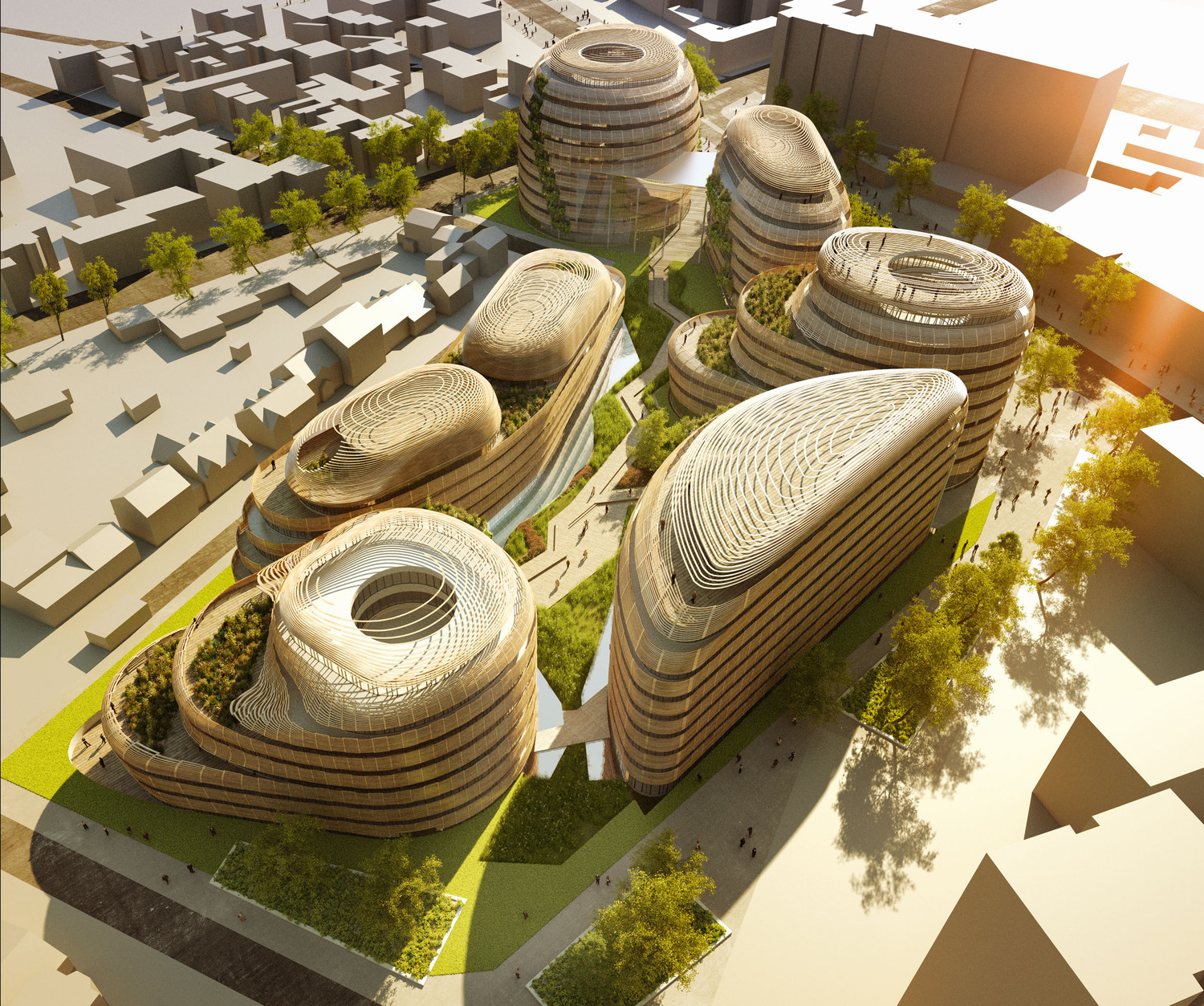
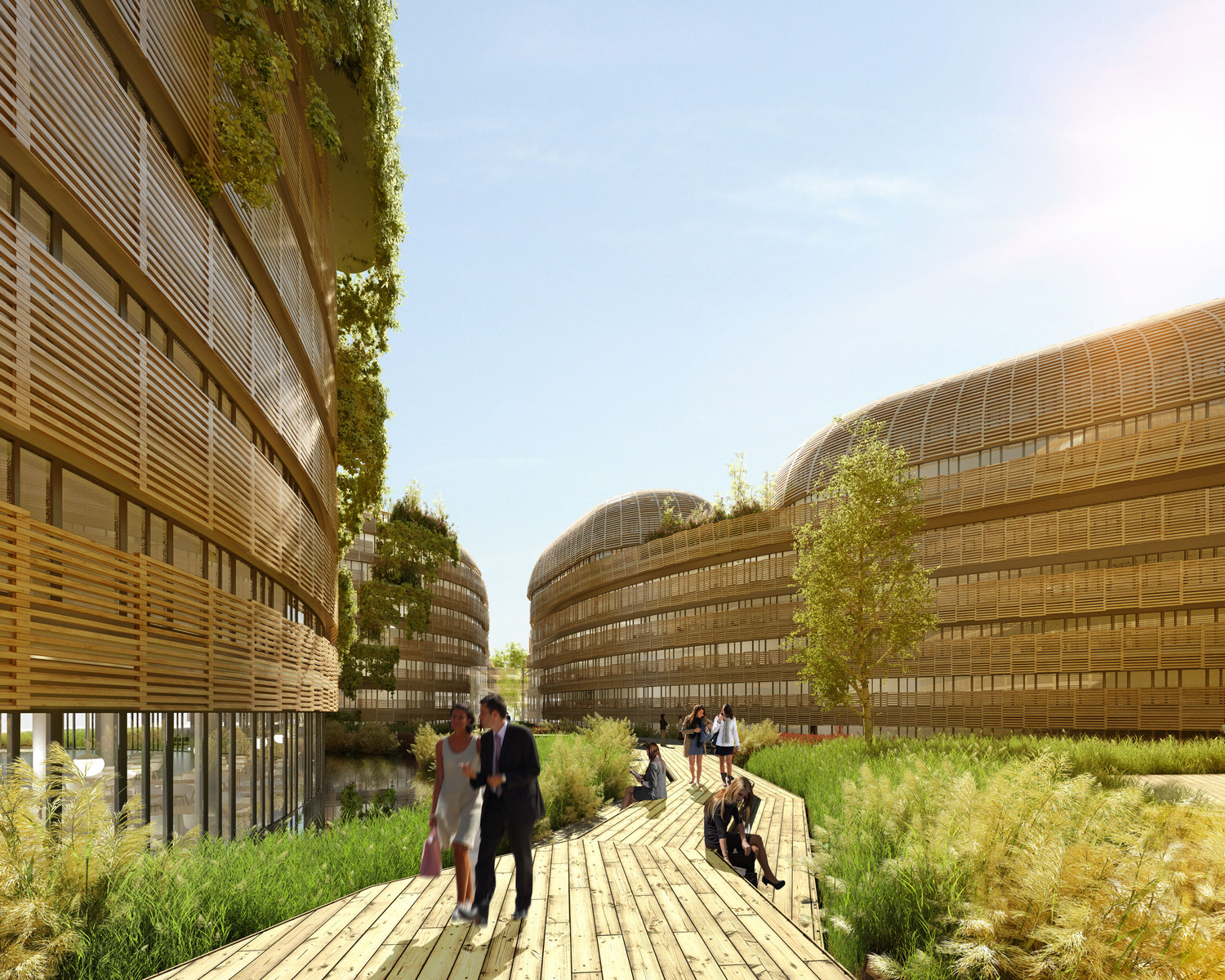
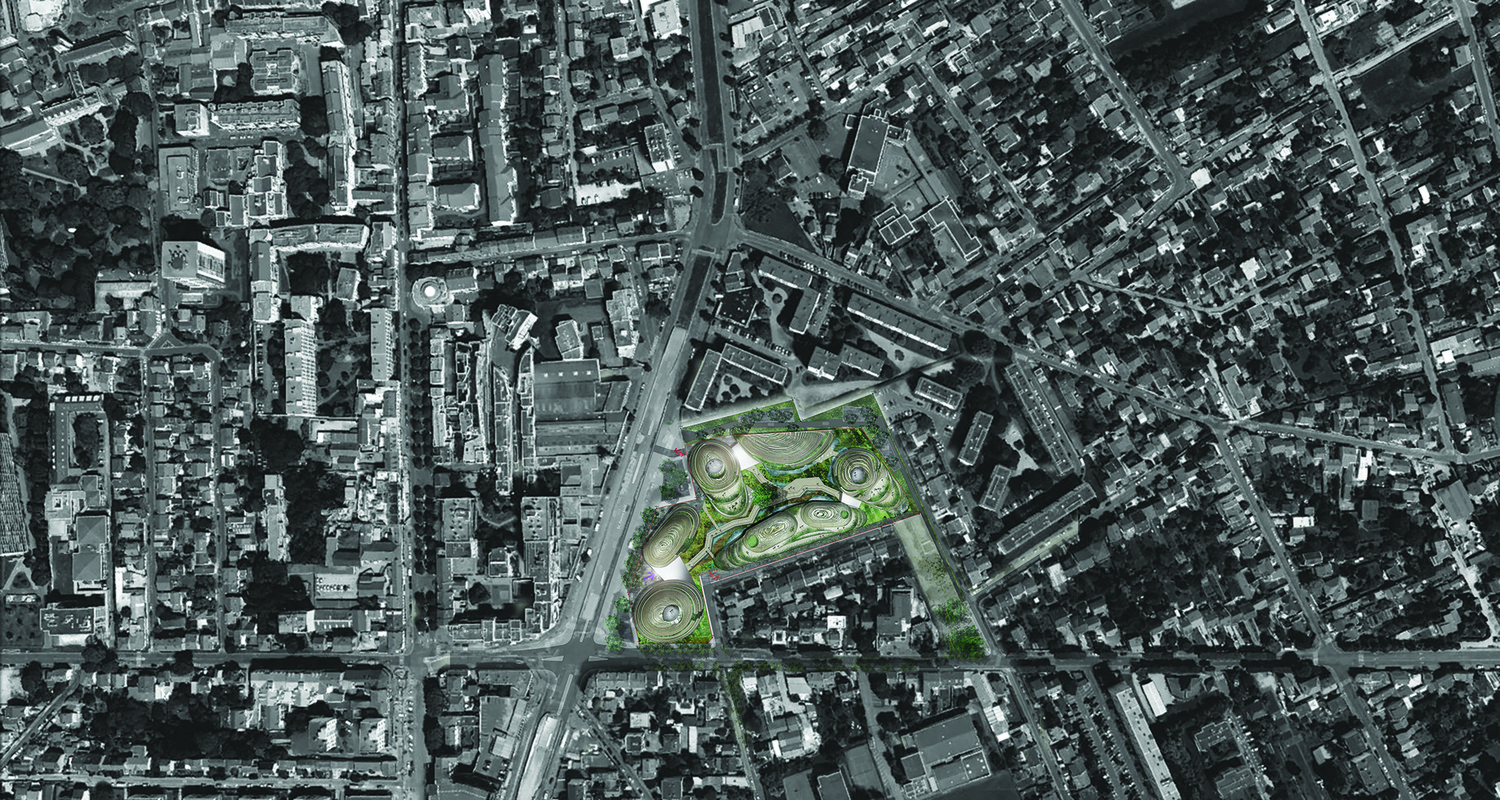
A dream like urban landscape — A new generation of offices. An oasis of green in the heart of Villejuif. This complex combines offices, stores and campus, creating a wooded archipelago of six hills within the city.

| Programme | Office campus with timber skin |
| Floor area | 56 000sqm / 602 780 000sqft |
| Project owner | Les Nouveaux Constructeurs |
| Location | Villejuif, France |
| Design team | Architect Loci anima; Engeneering Egis; Facades Enineering Elioth; Landscape Semper-Virens; Security Casso |
| Construction cost (excluding VAT) | € 98 235 000 / $ 109 700 000 |
| Certifications | HQE, BBC, BREEAM Excellent |
| Dates | 2013 (unbuilt) |
| Awards | Competition runner-up |
The Campus Aragon in Villejuif is a visionary project designed in 2013 by the architectural firm Loci Anima, led by Françoise Raynaud. Although never built, the proposal imagined a new generation of office spaces set within a dreamlike urban landscape.
An Urban Oasis Inspired by Nature
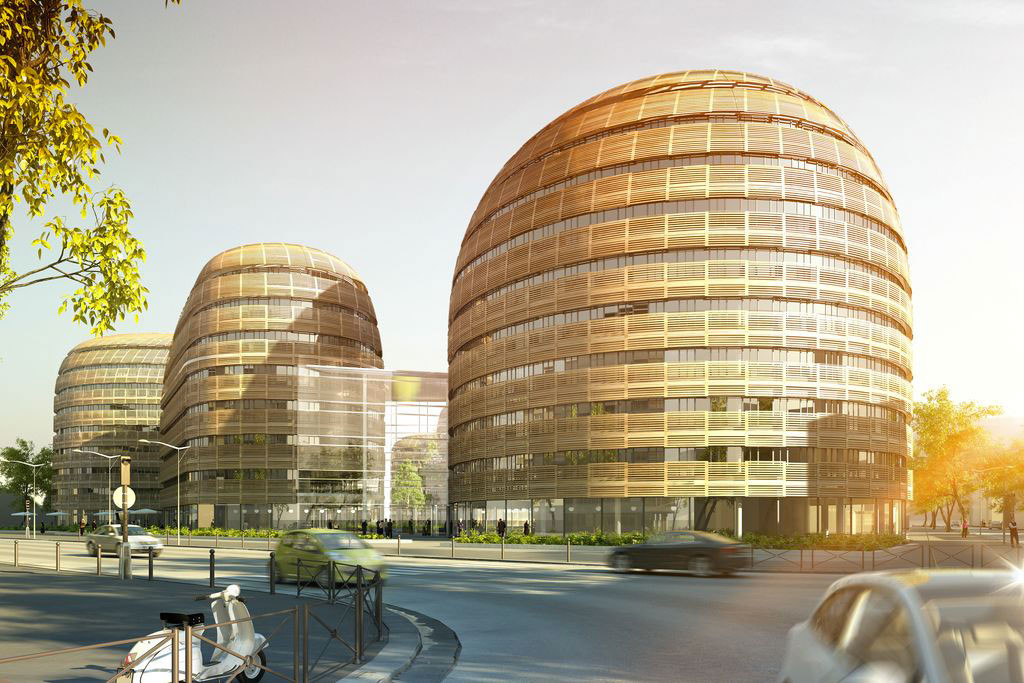
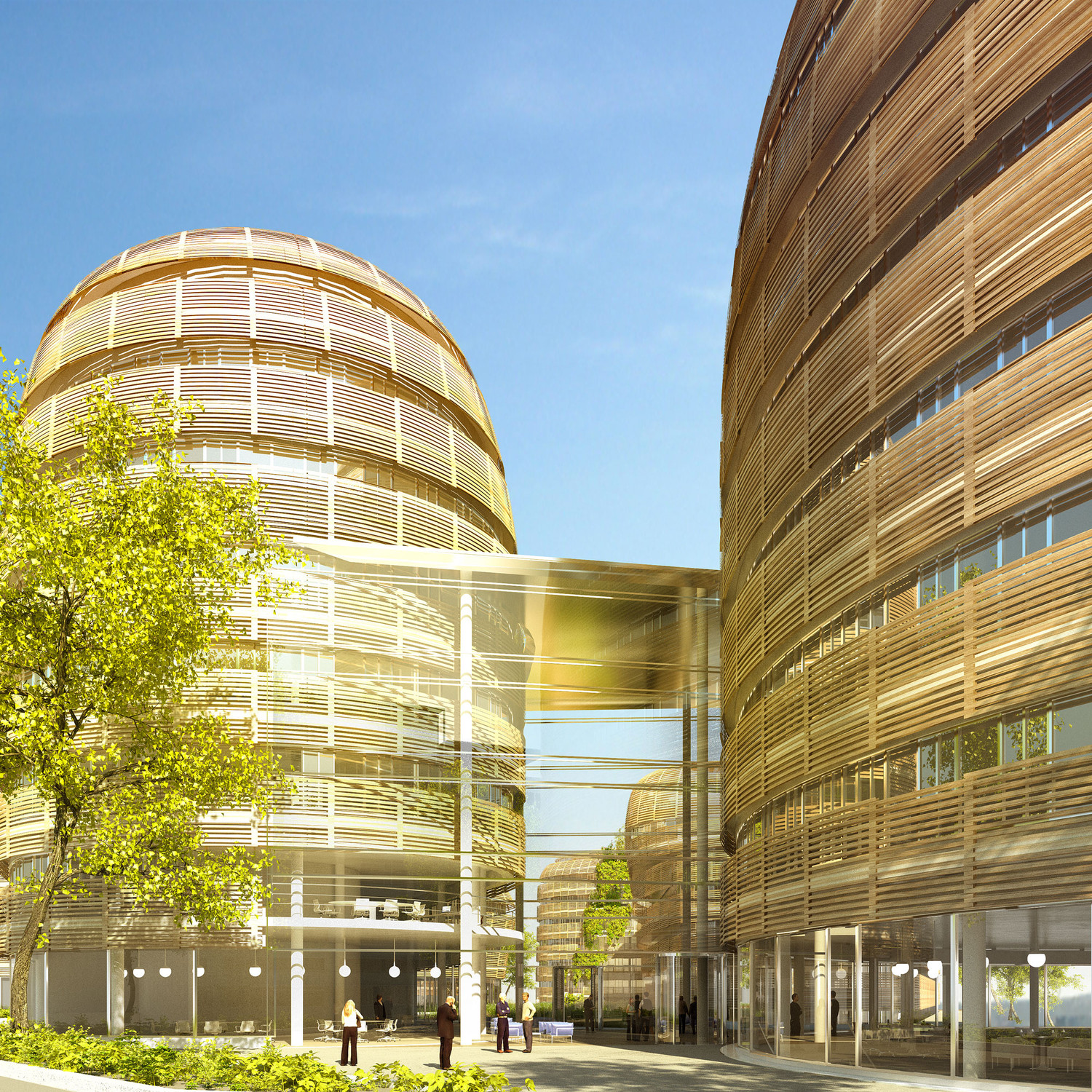
Nicknamed “The Enchanted Islands,” the campus was composed of six rounded buildings resembling a wooded archipelago in the heart of the city. Each structure was wrapped in timber façades, enhancing landscape integration and environmental performance.
A Mixed-Use and Sustainable Program
Covering 56,000 m², the project combined office spaces, shops, and communal areas, with a strong emphasis on biodiversity and user comfort. It targeted HQE, BBC, and BREEAM Excellent certifications.
A Multidisciplinary Team
The client was Les Nouveaux Constructeurs. The project team included Loci Anima (architecture), Egis (engineering), Elioth (façades), Semper-Virens (landscape), and Casso & Associés (fire safety).
Although it remained a finalist and was never realized, Campus Aragon stands as a powerful example of Loci Anima’s approach—blending architectural innovation, sustainability, and urban poetry.